About 95% closed with evidence
Most of a typical backlog is not exploitable. Konvu proves it finding by finding, and each dismissal carries its own evidence trail.
A reason, not a black box
Every dismissal names the code path Konvu checked and the condition that ruled it out. You can check the reasoning yourself.
Stop re-checking closed tickets
When a finding closes as not exploitable, the evidence goes with it. No re-opening the same question a week later.
Fewer tickets, all real
What reaches your queue already survived exploitability analysis, so every ticket in it is worth opening.
A dismissal you can check
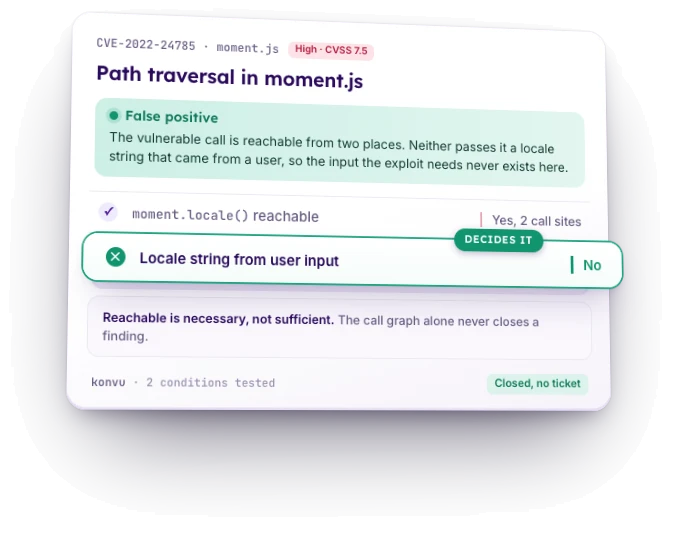
Konvu checks whether the vulnerable code runs and whether the conditions needed to exploit it are present. When a finding fails that check, the evidence goes into the ticket: the function checked, the path that never executes, the config that blocks it.

Recognition
"Konvu stands out by combining all aspects of reachability with AI-based prioritization, resulting in some of the most robust false-positive reduction on the market."
James Berthoty, Founder at Latio
Read the full report →What made the dismissals defensible
Most SCA findings flag a vulnerable function that exists somewhere in a dependency, not one your application calls. That's not a flaw in the scanner. That's what SCA tools are built to check. Konvu confirms the call graph first, then checks whether the exploit's own condition holds, before it closes anything.
The same standard both sides expect
A developer wants to know a ticket is worth the time before opening it. An auditor wants to know why a finding was closed. Konvu answers both from the same record: what was checked, and why it doesn't apply here.