Fixing is easy. Fixing safely is hard.
Once Konvu confirms a finding is exploitable, it writes the fix, runs your suite, and opens the pull request that closes it. Dependency upgrades and findings in your own code both go this way. The verdict starts the fix, so remediation is not a second project that begins after triage ends.
A pull request for either kind of finding
A dependency upgrade or a fix in your own code, opened as a reviewable PR: changelog checked, tests run, breaking changes flagged before you see it.
Only for findings it proved
A pull request opens for findings Konvu confirmed exploitable in your environment, so the review queue holds upgrades worth merging rather than every CVE a scanner flagged.
The loop closes itself
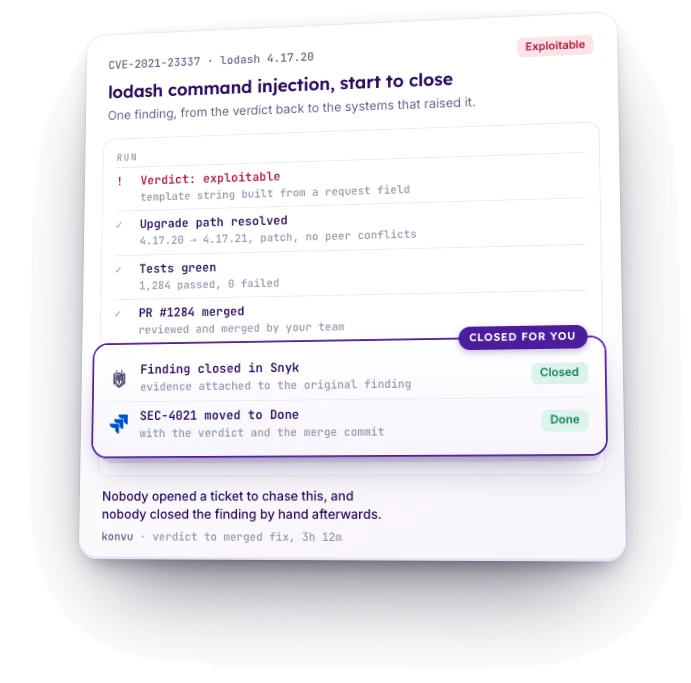
When the pull request merges, Konvu closes the finding in the scanner that raised it and moves the ticket, with the verdict and the merge commit attached.
Lands where your team already works
Fix PRs open in your repositories and status updates post to Slack and Jira as each one moves, with no separate remediation dashboard to check.
The verdict starts the fix, and the fix closes the finding
Most tooling hands you a verdict and stops. The mechanical work after it is what consumes the week: finding the upgrade that closes the CVE, or writing the check the SAST finding is missing, discovering what it breaks, fixing that, and then remembering to close the finding in the scanner once the branch is green.

Recognition
"The platform delivers two key outcomes: vulnerability prioritization and remediation, and is well positioned to solve both effectively."
James Berthoty, Founder at Latio
Read the full report →Research, plan, upgrade, verify, then a pull request
Konvu reads the upstream changelog, checks for breaking changes between your current version and the target, runs your test suite, and opens the pull request once it passes. The remediation plan arrives with the vulnerability it fixes and why the PR is safe.
Status lands in the tools you already use
No separate remediation dashboard. Fix PRs open against your connected repositories and status updates post to Slack and Jira as each one moves, so the work stays visible where your team already looks.